

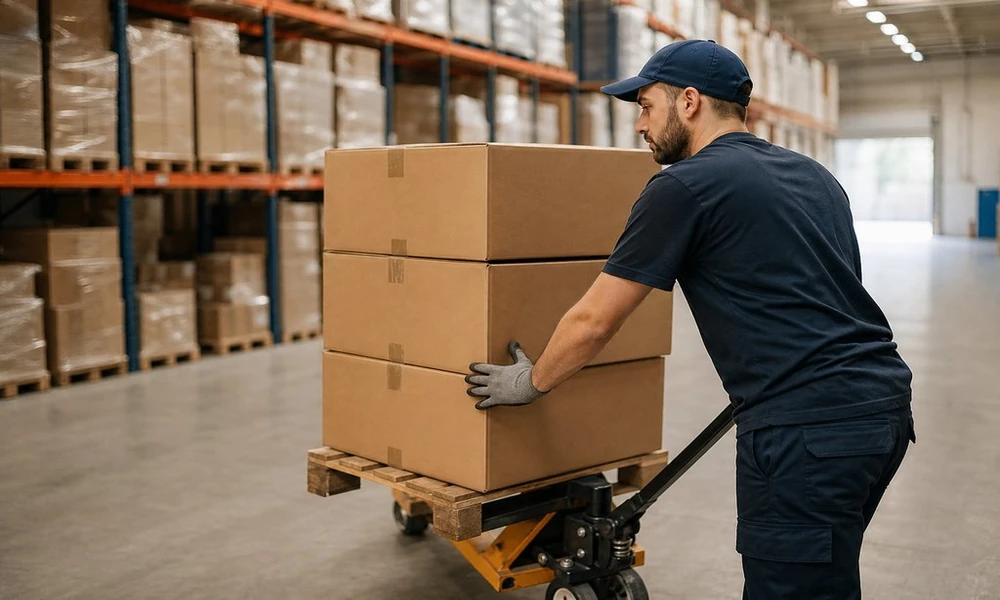
Warehouse storage and delivery operations
Warehouse moves don’t happen in a vacuum, especially in San Jose, where tight delivery windows, labor constraints and limited staging space can conspire to make any facility change feel chaotic fast.
It’s tempting to think the hard part of a move is the layout itself. It’s not. The tricky part is all the things you’re still expected to do during a move – like receive product, pick orders, load and unload trucks – while the racks, conveyors or dock lanes supporting those operations are in various states of transition.
Location Changes
Employees form habits fast – Scientific American explains the why of it at scientificamerican.com/article/how-the-brain-makes-and-breaks-habits, and picking is no different. It’s human nature to go to B-14 to find that item because that’s where it’s always been, even if that rack’s since been moved, cordoned off or repurposed.
While temporary aisle and location signs will be in play during a transition, clarity beats aesthetics. Put up a quick and dirty “Aisle X” reference guide in receiving, near the time clocks and along primary picking lanes. Include:
- Crosswalks from old to new locations
- Off-limit areas
- Who to ask for location-related questions that shift
Supervisors should validate a sample of locations against live picks before each shift. You can’t test everything, but sample across picking areas and product types, keeping an eye out for:
- Locations that were moved but not updated
- Interim labels that fell off
- Product stashed in hard-to-reach places (like full pallets in tight aisles that can’t be retrieved with normal material handling equipment)
Ideally there’s a single point person per shift to field location-related questions – misplaced labels, product that can’t be found, etc. That doesn’t mean they should fix every problem on their own, but they should at least be the owner of those exceptions so you can get back to work quickly.
Temporary Storage Under Pressure
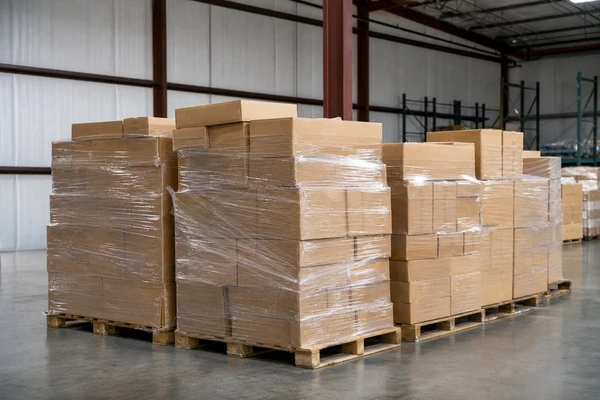
Temporary storage and material handling equipment
Racking projects, conveyor changes, dock work and other facility-related projects often render part of a warehouse temporarily out of commission, and of course this always seems to happen when there’s product to receive (Warehouse capacity keeps that temporary overflow contained). In situations like these, it’s all too easy for employees to simply place product wherever they can. Before long, your interim storage area has morphed into a disorganized jumble of product no one can find.
Avoid this by identifying temporary storage areas in advance and defining what belongs in each. For example:
- Overflow receiving space: Unloaded product that can’t be put away just yet
- Interim picking space: For fast-moving product that would normally live in a disabled picking location
- Pending putaway: Product you know where belongs, but can’t put away just yet
- Problem pallets: Damaged, commingled or otherwise unknown product
Designate these areas visually, with floor markings and large, easy-to-read signage (remember, folks will be viewing these labels from forklifts and other MHE). Communicate their purpose during shift kickoffs as well, and make sure employees understand what to do if an interim area fills up. There should always be a Plan B they know about in advance, rather than winging it when space runs out.
One other caution: Interim storage areas can inadvertently encroach on traffic aisles, blocking equipment operators or impeding their ability to make turns. Before using an interim storage area, validate MHE maneuverability on the floor (not just on your layout sheet!). A pallet may technically “fit,” but still prevent someone from backing out of a trailer or executing a turn. And, of course, make sure temporary storage never obstructs egress routes or impairs dock operations.
Appoint one person per shift, typically a supervisor, to reconcile unclaimed pallets. That means product that’s unlabeled, lacks an associated task and whose movements weren’t entered. The evening crew finds more mystery pallets than Problem Product can accommodate – now what?
What Changes at the Dock?
Receiving flow changes, such as relocated check-in stations, trailer lanes or pedestrian routes, can also trip up the flow of product onto the floor. Truck drivers and warehouse temps are particularly likely to be confused by changes they weren’t expecting.
Walk truckers through any changes to dock operations: Where to check in, which doors/lifts are in service, who controls traffic flow, where to wait, what to do if their assigned door is backed up, etc. Likewise, warehouse temps should know where to check in and who controls access to closed-off areas.
Especially in San Jose, where operations often run to a very tight inbound/outbound schedule, it’s critical that these details make sense. Five minutes of confusion can snowball and wreak havoc on a warehouse’s daily flow.
Gold Rush Express Delivery – 910 Bern Ct #150, San Jose, CA 95112, United States – (408) 292-7300 – Website: https://www.goldrushexpress.com – local contact details.
Keeping the First Days Visible
During the first several days after a layout or process change, resist the temptation to implement other, less-critical changes. Instead, focus your communications efforts on the details warehouse employees and visitors absolutely must know in order to do their jobs safely and correctly:
- Where product belongs (including Problem Product!)
- Where it can live temporarily
- How product moves in and out of the building
Finally, it’s helpful to track location mistakes, blocked-off areas, unclaimed product and dock-flow challenges and pass the list to the next shift’s supervisor for review before his/her crew clocks in.